

DATE
19 – 22 OCTOBER 2026
LOCATION
KRUGER NATIONAL PARK
Learnnected: Empowering Education in a Connected World
DATE
19 – 22 OCTOBER 2026
LOCATION
KRUGER NATIONAL PARK
Learnnected: Empowering Education in a Connected World
Register for this conference today!
IFIP TC3 – WCCE 2026 – Kruger National Park
KEYNOTES
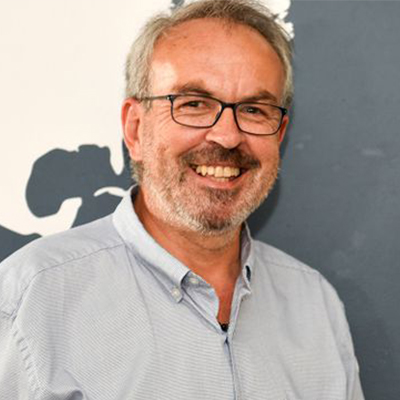
Professor Jean Greyling
HOD, Computing Sciences, Nelson Mandela University
Think Code Solve – under a tree
Abstract
From around 10 years ago, the term which all politicians, academics and thought leaders used to throw in regularly was the “Fourth Industrial Revolution” (4IR). Suddenly, we hardly hear anyone referring to the 4IR anymore – it has now been replaced by “Generative AI”. Not a conference goes by without papers on topics such as “The role of AI in …”. This is obviously also true for computer education conferences.
In my talk, I want to reflect on what this current focus implies for a continent where millions receive their education in schools with limited resources – sometimes even under a tree. There is a clear pushback against uses of digital technology in education, with slogans referring to “low tech – no tech” becoming popular, while the value of physical books above tablets is being recognized.
Why is “Think Code Solve” (or basic problem-solving) so important within the AI revolution, and how do children learn to think, code and solve problems without a computer laboratory or internet connectivity?
The Tangible story of how unplugged coding has impacted code education across 5 continents will be offered in the talk as an important case in point.
Biography
Prof Jean Greyling is Head of Department of Computing Sciences at Nelson Mandela University. Throughout his career he has been interested in inclusive education. For the past 25, years he has been marketing the computing discipline and his department throughout the Eastern Cape province, often in under-resourced schools.
During the years of the instant messaging system MXit, he and his students initiated various projects, reaching out mainly to rural learners. Their MXit “Tech Dictionary” at one stage had as much as 100,000 queries per month.
Inspired by a postgraduate project of one of his students in 2017, Byron Batteson, Prof Greyling initiated the current Tangible movement, which focuses on unplugged and offline activities to introduce coding and problem solving to learners.
The movement, implemented by the NPO Leva Foundation, has a footprint over 5 continents, culminating every year in the Tangible Coding World Cup.

Joice Benza
IFIP Vice President
IFIP women in ICT Africa Chair
Title: Strengthening Africa’s Digital Leadership Pipeline: IFIP Progress 2025–2026
Africa has made significant progress in ICT capacity development over the past year through targeted initiatives of the International Federation for Information Processing (IFIP). This presentation highlights key achievements in several priority areas encompassing: the IFIP funded Masters in ICT Scholarship Programme the expansion of IFIP member societies across the continent; the continental ICT research-based progress report; as well as the focus on the recently launched IFIP Woen in ICT Africa.
The scholarship programme is supporting a growing cohort of African postgraduate students specialising in digital governance, cybersecurity, AI, and ICT4D, with early outcomes showing stronger research output, improved mentorship pathways, and increased engagement with IFIP.
In this context, the keynote highlights IFIP’s proposed support for African governments’ advanced efforts to expand connectivity into rural and underserved communities, through the IFIP digital equity initiatives. This support will help further narrow the continent’s digital divide. By championing planned initiatives for African women and girls in STEM, IFIP will strengthen its impact and visibility. Selected case studies will also be presented as evidence that this objective is achievable.
In parallel, IFIP’s footprint in Africa has expanded through revitalised and newly onboarded member societies, strengthening regional collaboration and alignment with global ICT standards. This update outlines progress, challenges, and opportunities for scaling IFIP’s impact, demonstrating Africa’s growing contribution to global ICT knowledge networks and the WCCE 2026 vision of empowering education in a connected world. When global collaboration meets local commitment, digital transformation should accelerate.
Register for this conference today!
WCCE 2026 SPONSORS
We are immensely grateful for the generous support of our sponsors, whose contributions are pivotal in making WCCE 2026 a resounding success.




Download the book of abstracts
Get in touch
Conference Organisers

Phone: +27(0) 82 770 3855
Email: wcce@africamassive.co.za